
Water is fundamental to NEO’s business, with approximately 84% of our products composed of water, driving our commitment to efficient, responsible, and sustainable water management.
NEO optimizes water use through advanced manufacturing and water-efficient technologies, minimizing consumption and waste. This is reinforced by a zero-wastewater discharge approach, enabling closed-loop reuse and protecting local ecosystems.
Neo further enhances performance through ozone and ultrafiltration technologies, reducing chemical use and environmental impact.
Our approach is anchored in three principles:
- Efficiency – reducing water use
- Circularity – enabling closed-loop reuse
- Protection – safeguarding water quality and communities


NEO considers sustainable water resource management to be an important aspect of its operations, as water is a finite resource essential to business activities, communities, and ecosystems. To address water-related issue, NEO has established Sustainability Management Policy and Environmental Policy as the main frameworks for managing environmental impacts. The company also developed a Water Resource and Water Quality Management Guideline to support consistent water management practices across operations.
Through this approach, the Company is committed to maximizing the efficient use of water resources, while minimizing potential impacts arising from water scarcity due to climate change and ensuring the sustainable availability of water resources for all sectors. The Company has established an annual target to regulate and reduce water consumption, while also aims to achieve Zero Wastewater Discharge. In addition, water conservation measures are incorporated into operational procedures, with clear guidelines for employees to follow, and water consumption is also monitored regularly, on both monthly and annual bases, across the Company’s facilities.
For further information, please refer to the Environmental and Climate Policy
NEO is committed to enhancing water security across operations, communities, and ecosystems through responsible water management guided by the 3Rs: Reduce, Reuse, and Recycle.
The Company advances water efficiency by optimizing production processes and utility systems, while increasing reuse and recycling through treatment and recovery solutions to reduce freshwater demand and improve resource productivity.
To mitigate impacts on water resources and surrounding communities, NEO ensures all wastewater is treated to meet applicable legal and internal standards prior to reuse or discharge. The Company also pursues Zero Wastewater Discharge through continuous improvement in recycling and wastewater management practices.
Water stress assessment
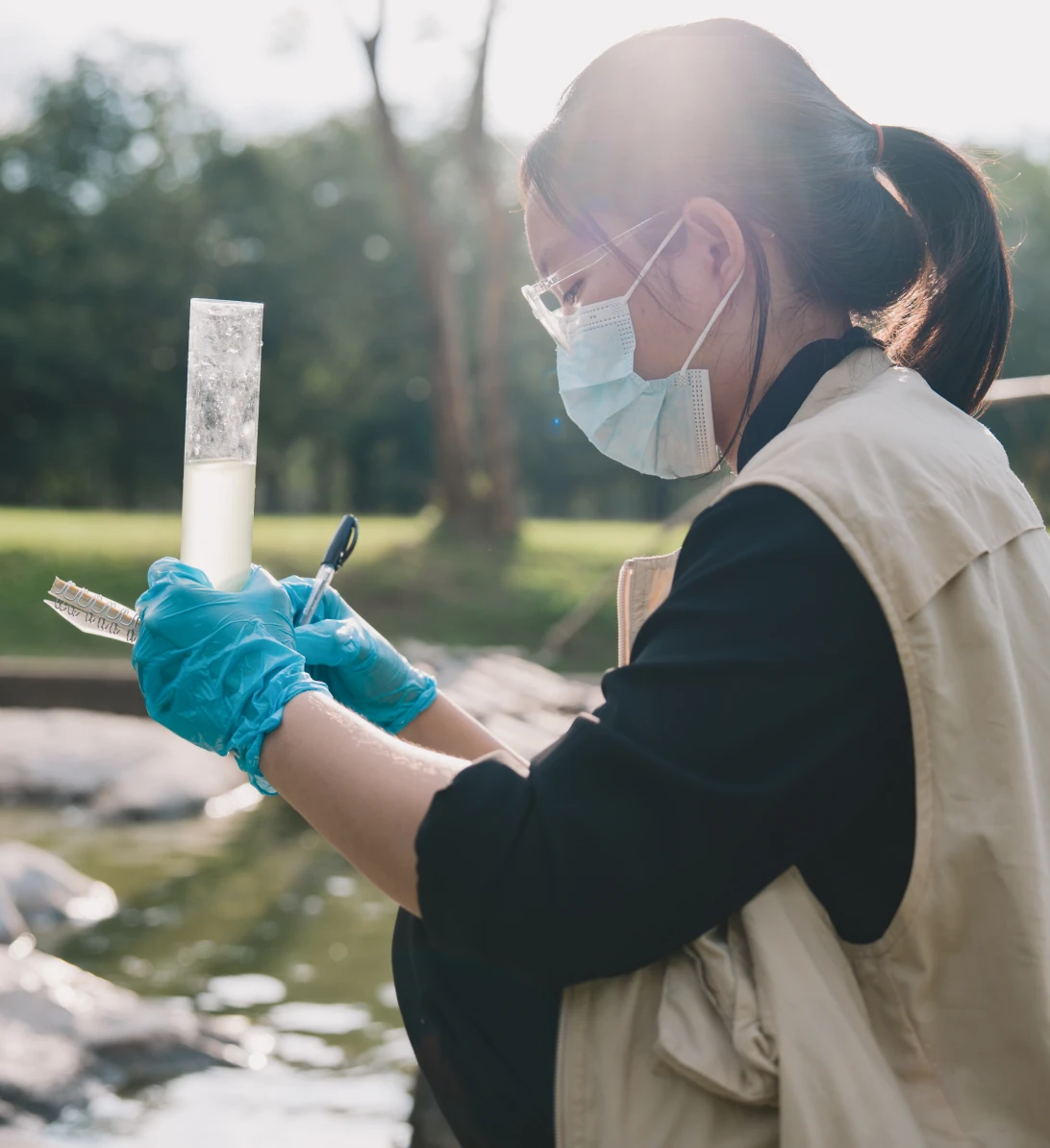
Water is considered a key resource supporting NEO’s operations. To enhance its understanding of potential risks and challenges related to water availability, the Company conducts regular water risk assessments across its operational locations using the Aqueduct Water Risk Atlas, developed by the World Resources Institute (WRI).
The assessment covers 100% of the Company’s operational sites and includes key factors such as the Company’s dependencies on water resources, potential impacts arising from its activities, anticipated changes in water availability and quality, as well as relevant regulatory considerations at the local level, while also aiming to identify water stress areas to support the tracking of water consumption and the consideration of target setting in high water stress locations. The assessment results indicate that Neo Factory in Pathum Thani and Neo Corporate in Bangkok are located in areas of high to extremely high water stress, which may affect water availability and operational continuity over time.
To support responsible water management, the Company continues to monitor and review these risks on an ongoing basis and incorporates them into its overall risk management approach, including using the insights to inform improvements in water use efficiency and the consideration of appropriate measures where relevant.
For further information, please refer to the Energy and Climate Management
Water-related initiatives and investment in R&D to mitigate water-related risks
Water-related risks, particularly water stress, may lead to additional costs associated with water treatment and quality management, as well as capital investments required to secure alternative water sources or improve water efficiency. In certain situations, water shortages may also result in operational disruptions or the need for contingency measures. Based on internal assessment, water-related risks are currently assessed as a moderate risk level. Should these risks materialize, they may result in additional costs associated with water treatment, water quality management, alternative water sourcing, and water efficiency improvement measures, with potential financial impacts estimated to be within 1–3% under the Company's risk assessment criteria, depending on water availability conditions and operational requirements. Recognizing the importance of proactively managing these risks, NEO has allocated approximately 6,000,000 THB in 2025 for investments in water-related initiatives and R&D projects aimed at enhancing water efficiency, expanding water recycling capacity, and strengthening long-term water resilience. These initiatives include:
-
City Water and Recycled Water Plant
To address water stress issue, NEO has developed and implemented the City Water and Recycle Water Plant, an integrated water treatment and recycling system designed to improve water efficiency and reduce dependency on external water sources.
The system combines multiple treatment technologies, including Clarifier, Ultrafiltration (UF), and Reverse Osmosis (RO), arranged as a multi-stage treatment process to enhance overall water quality and enable water reuse across operations. The Clarifier system is integrated with the recycling process to remove suspended solids, while UF and RO systems are applied to further treat water and achieve the required quality for reuse in production.
In 2025, the system has been progressively expanded to increase treatment and recycling capacity, with the RO system reaching a capacity of approximately 15 Q/hr. (300 Q/day). The Company has continuously invested in the development of this system since 2018, with a total investment of approximately THB 53 million. This initiative helps reduce the Company’s reliance on external water sources by approximately 1,992,900 cubic meters per year.
Looking ahead, NEO plans to further enhance system capacity through the expansion of the recycling system, including the implementation of additional Ultrafiltration and Reverse Osmosis capacity in 2026, with an estimated investment of THB 10 million, to further strengthen water reuse efficiency and long-term operational resilience.

Operating in a water-stressed area requires that the company places greater emphasis on the efficient and responsible management of water resources in order to mitigate potential risks and conflicts with surrounding communities. The company therefore aims to foster stakeholder engagement to collaboratively identify appropriate and equitable water use solutions.
The engagement also presents a valuable opportunity to strengthen trust, enhance mutual understanding, and foster constructive relationships between the company and the community, while supporting the advancement of sustainable operational practices that deliver long-term value for the business, society, and the environment.
Key initiatives include:
| Stakeholder Group / Participating Organizations | Details on engagement |
|---|---|
| Water monitoring collaboration with Provincial Waterworks Authority (PWA) |
|
| Water monitoring collaboration with Royal Irrigation Department (Rangsit South Canal - Khlong 13) |
|
| Water monitoring collaboration with Ministry of Natural Resources and Environment (MNRE) |
|
| Support local agricultural farmers during drought period |
|
| Collaborate with local Municipality and Communities to restore water quality |
|
Stakeholder Collaboration to Strengthen Water Security
In addition to internal initiatives, NEO engages with key stakeholders to strengthen water security and support sustainable watershed management across its areas of operation. The Company collaborates with government agencies, including the Provincial Waterworks Authority, Royal Irrigation Department, and Ministry of Natural Resources and Environment, to monitor water availability, quality, groundwater resources, and drought risks, supported by technologies such as smart sensors to enable data-driven and proactive management.
NEO also works with local communities, municipalities, schools and agricultural stakeholders on water-sustainability strategies to enhance water-use efficiency, improve the quality of local watersheds and bolster climate resilience. The nature of these partnerships ranges from project-based water quality restoration and community awareness initiatives to knowledge sharing, as well as providing local farmers with guaranteed access to reserved water during drought events. Through these partnerships, NEO seeks to alleviate demand on local water supplies, enhance long-term water security and generate shared value to a community and to surrounding ecosystems.
The company regular monitoring of water withdrawal and water consumption across all operations, alongside the implementation of water reduction measures based on the 3Rs principle - reduce, reuse, and recycle.
All water-related performance presented in this section reflects operations located in water-stressed areas, as all of the Company’s sites fall within such regions.
Water withdrawal
| Unit | 2023 | 2024 | 2025 | |
|---|---|---|---|---|
| Water withdrawal (total) | Cubic meters | 461,090.00 | 1,177,949.50 | 889,352.00 |
| Water withdrawal by source | ||||
| - Surface water* | Cubic meters | 401,348.00 | 1,118,763.50 | 829,250.00 |
| - Ground water | Cubic meters | 0 | 0 | 0 |
| - Seawater | Cubic meters | 0 | 0 | 0 |
| - Produced water | Cubic meters | 0 | 0 | 0 |
| - Third-party water* | Cubic meters | 59,742.00 | 59,186.00 | 60,102.00 |
*Remark:
- Third-party water withdrawal includes water withdrawal from external wastewater, however, these are not relevant to NEO.
- Surface water withdrawal includes water withdrawal from Harvested rainwater and Used quarry water collected, however, these are not relevant to NEO.
Water discharge
Reflecting its commitment to sustainable water management, NEO has achieved Zero Wastewater Discharge since 2018. This achievement is enabled by effective water management practices and the reuse of treated water processed through an Ultrafiltration (UF) membrane system for various activities such as landscape irrigation, roof cleaning, and recirculation within the production process, thereby ensuring that no wastewater is discharged outside the facility. The Company remains committed to maintaining this performance through continuous monitoring and ongoing improvement in water use efficiency across its operations.
| Unit | 2023 | 2024 | 2025 | |
|---|---|---|---|---|
| Water discharge (total) | Cubic meters | 0 | 0 | 0 |
| Percentage of treated wastewater | Percentage | 100 | 100 | 100 |
| Water discharge by destinations | ||||
| - Surface water | Cubic meters | 0 | 0 | 0 |
| - Ground water | Cubic meters | 0 | 0 | 0 |
| - Seawater | Cubic meters | 0 | 0 | 0 |
| - Third-party water* | Cubic meters | 0 | 0 | 0 |
| - Total volume of freshwater discharge (≤ 1000 mg/L Total Dissolved Solids) | Cubic meters | 0 | 0 | 0 |
| - Total volume of other water discharge (> 1000 mg/L Total Dissolved Solids) | Cubic meters | 0 | 0 | 0 |
*Remark: Third-party water discharges includes water discharge from beneficial or other uses
Water consumption
| Unit | 2023 | 2024* | 2025* | |
|---|---|---|---|---|
| Water consumption (total) | Cubic meters | 461,090.00 | 748,066.00 | 979,942.00 |
| Total consumption in area water stress* | Cubic meters | 461,090.00 | 748,066.00 | 979,942.00 |
| Production volume | Tons | 192,127.00 | 196,299.00 | 211,415.76 |
| Water Consumption Intensity | Cubic meters/Tons | 2.40 | 3.81 | 4.64 |
*Remark:
- 100% of NEO’s operational sites, namely the headquarters and NEO Factory, are located in water-stressed areas.
- Water consumption in 2025 increased compared to 2024 due to plant expansion and increased production capacity. However, NEO has implemented water management measures through the Ultrafiltration (UF) membrane system, which reduces water consumption by approximately 174,000 cubic meters per year. The company will continue to enhance water efficiency to achieve its long-term water withdrawal and consumption reduction targets.
NEO has set a target and is committed to achieving Zero Wastewater Discharge. In line with this commitment, a fully integrated wastewater management system has been implemented across all operations, achieving 100% recycling and reuse, with no wastewater discharged outside NEO’s facilities.